Two-player navigation puzzle that prizes communication and coordination
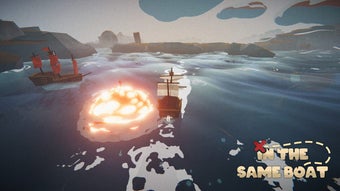
In the Same Boat, developed by Plouf, is a cooperative strategy-adventure built for two players to navigate procedurally generated seas. One player pilots without a map while the other charts from a blind cabin, creating a communication-first core loop. Key systems include manual cartography, time-limited missions, and varied biomes that change each run. The game suits players who want short, intense cooperative sessions that hinge on teamwork and shared decision-making.
What kind of game is In the Same Boat?
This is an asymmetric cooperative strategy title that pairs two complementary roles: a sighted Sailor who commands the ship and a secluded Cartographer who holds the map. Success depends on verbal exchange because neither player has complete information, making asymmetric blindness the standout mechanic. Players trade directions, mark hazards, and decide routes together; the manual placement of landmarks turns map-making into an active strategic task rather than an automated feature.
Does it have a multiplayer mode and short-session design?
The game supports online co-op for two players and also lists single-player support for practice or solo runs. Sessions are designed to be compact, with time-based objectives that concentrate strategy into roughly quarter-hour intervals. Procedural generation and multiple biomes supply variability between runs, which helps the short sessions keep replay value high by changing layouts, landmarks, and environmental hazards each time.
How steep is the learning curve and what does the presentation offer?
Onboarding leans on partner communication rather than hand-holding; the Cartographer must place markers manually while the Sailor interprets instructions, so players who read maps confidently adapt faster. Visual variety across biomes gives clear environmental cues and distinct hazards to learn, while single-player mode provides a controlled space to practice directions. Time limits raise the stakes, rewarding pairs that develop concise callouts and mutual shorthand during repeated attempts.
A cooperative choice for communicative players who enjoy quick, shared challenges
The game is a focused pick for pairs who like social problem-solving and short, repeatable strategy runs; it emphasizes spoken coordination and mutual trust over solo exploration. Players who prefer long, exploratory sessions or minimal reliance on partner communication may find the design less comfortable. For duos who enjoy conversation-driven puzzles, the game offers compact, purposeful play sessions worth trying.